Anisongs
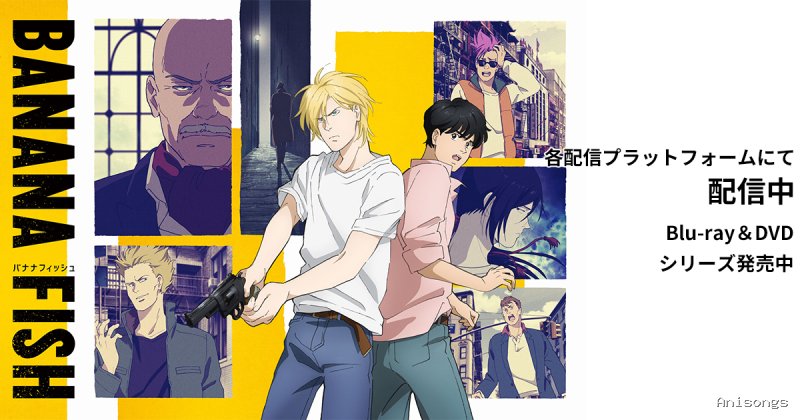
On the ending of the anime Banana Fish, which aired on Fuji TV's "noitaminA" block, a song no one had heard before began to play: "Prayer X." Daiki Tsuneta posted on his own X account, "As our band's first tie-up song written from scratch, I read the original manga carefully and wrote both the lyrics and the music" ( https://x.com/DaikiTsuneta/status/1027866422238572546 ). Vocalist Satoru Iguchi spoke as well: "As a child, Banana Fish sat on the bookshelf in my siblings' room, and I was absorbed in it back then. I think 'Prayer X' is a song about the conflict and the prayer that everyone carries" (Wikipedia).
To read the source closely and write a song that draws near to the work's emotions. In their very first anime tie-up, King Gnu faced the work with sincerity.
From here, eight years. King Gnu would go on to cross paths with anime six times. And over the course of those encounters, Tsuneta's stance toward anime would change unmistakably.
Six Encounters
Let's line up King Gnu's anime tie-ups in chronological order.
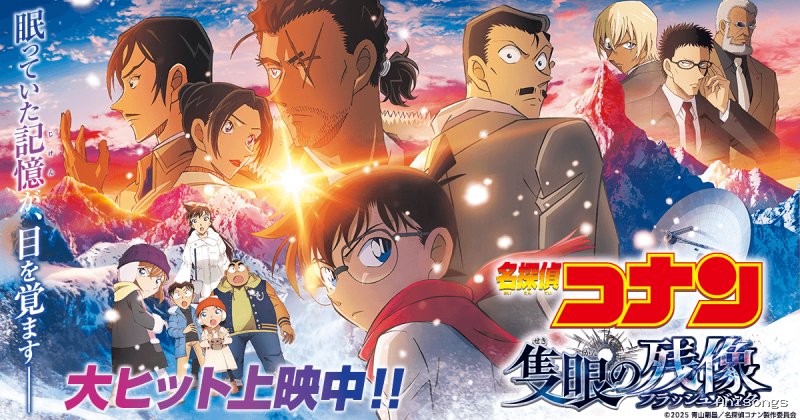
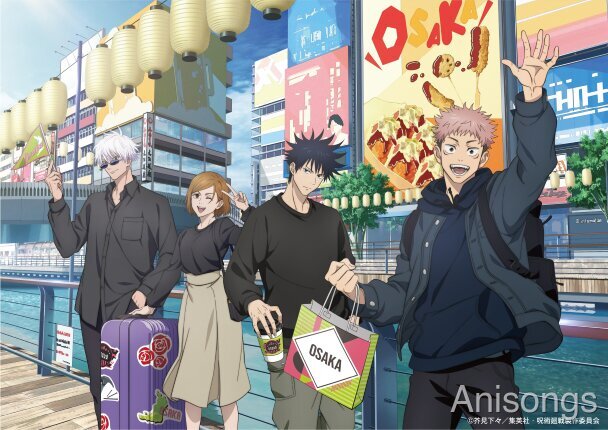
2018, Banana Fish ED "Prayer X." 2021, Ranking of Kings OP "BOY." The same year, the theme song "Ichizu" and the ED "Sakayume" for the film Jujutsu Kaisen 0. 2023, Jujutsu Kaisen Season 2 Shibuya Incident OP "SPECIALZ." 2025, the film Detective Conan: One-Eyed Flashback theme song "TWILIGHT!!!" And in 2026, Jujutsu Kaisen Season 3 Culling Game Part 1 OP "AIZO."
Four songs for Jujutsu Kaisen alone. A band that supplies theme songs to the same anime this many times is exceedingly rare. But what matters here is not the count. It is the philosophy of "distance" that Tsuneta arrived at over these eight years.
"I Don't Want to Sing the Anime's Song"
In 2025, in a Billboard JAPAN interview ( https://www.billboard-japan.com/special/detail/4824 ) given for the Conan film's theme "TWILIGHT!!!," Tsuneta said the following.
When you write something from scratch for an anime, the feeling of singing a song that belongs inside the anime never quite sat right with me personally. When we perform it live, there's this discomfort in me, like "whose song am I even singing?" I have a strong sense that it has to be our song — that it has to be a song as King Gnu.
Rather than tailor-writing for some character, while there's inspiration I feel from watching the work, in the end what matters is probably a good sense of "distance." From around "SPECIALZ," I've been making things with that in mind.
These remarks are deeply telling. Tsuneta, who in 2018 had said he "read the original carefully and wrote the lyrics and music," has, since "SPECIALZ" in 2023, clearly grown conscious of "distance." Not drawing close to the work, but keeping an appropriate distance between the work and their own music. He has reached the conviction that this very distance is what brings both to life.
Two Fastballs Running Alongside
With "AIZO" in 2026, this philosophy is honed even sharper.
In a rockinon interview ( https://rockinon.com/interview/detail/214183 ), Tsuneta described his relationship with anime this way.
The songs we need for ourselves happen, thankfully, to have a natural affinity with Jujutsu Kaisen. It's close to the feeling of running alongside. So rather than a consciousness of dedicating something to Jujutsu Kaisen, it's more that our own fastball ends up running alongside Jujutsu Kaisen. That strength is on their side too, and both of us feel solidly grounded.
Not to dedicate, but to run alongside. These words pin down the essence of King Gnu's anime tie-ups perfectly.
This is not AKB0048. King Gnu does not try to step into the world of Jujutsu Kaisen. Nor, like the tie-ups of the '90s, do they simply "lay" J-pop on top of a work it has nothing to do with. The band throws the band's fastball; the work throws the work's fastball. When the two fastballs run alongside each other, a chemical reaction is born that neither alone could have produced.
"AIZO" is the culmination of that. As Mikiki's analysis ( https://mikiki.tokyo.jp/articles/-/44050 ) points out, the track opens with a shō suddenly sounding, and a 195-BPM drum'n'bass is slammed down. Gagaku and mixture rock. Not the result of drawing close to the work, but King Gnu's full-force fastball colliding with the frenzy of the Culling Game and throwing off sparks. Tsuneta himself commented, "We are all proud that it turned out to be a song that newly updates the royal road of King Gnu" (Sony Music official https://www.sonymusic.co.jp/artist/kinggnu/info/579847 ).
That said, for this "running alongside" to hold, there is a condition. King Gnu's songs are stylish, distinctive, and cool. Each one carries a powerful worldview and an extremely high degree of artistry. Because of that, the IP on the other side is required to have equal intensity. When the music carries this much of a worldview, if the work's side is weak, the balance collapses. Conversely, look at King Gnu's tie-up partners — Banana Fish, Jujutsu Kaisen, Detective Conan — and every one is an IP with overwhelming creative force. It is precisely because the stories have the thickness to go toe-to-toe with King Gnu's music that synergy is born. Running alongside only holds between those who can each run at full speed.
Anisong's "Third Path"
In the first installment, I wrote about the tie-up era of the '90s. An age when J-pop flowed into anime as a business strategy of the record companies, led by the Being label group. It had its merits and demerits, but as a result it pushed up the quality of anisong.
What King Gnu is doing, I think, is a "third path" that lies beyond that era.
The first path was the era of dedicated anisong. Music written for the work, consumed together with the work. The second path was the tie-up era of the '90s. J-pop rode on top of anime; its relationship to the work was thin, but the quality of the music lifted anisong as a whole. And the third path — what King Gnu demonstrates — is a relationship in which artist and work run alongside each other with equal force, and something new is born from the collision of their fastballs.
Kazuki Arai also said this in the rockinon interview: "Take Slam Dunk — back then, anisong wasn't singing the contents of the anime as-is, you know?" While overlapping the '90s tie-ups with their own present, the decisive difference is that King Gnu has a self-awareness of running alongside the anime. An awareness the Being camp never had.
The young man who, with "Prayer X," read the source closely and drew near to the work, spent eight years and arrived at the aesthetics of "running alongside." Not to dedicate to the work, nor to exploit the work, but to throw their own fastball with everything they have and trust in the moment it intersects with the work's fastball. That is the relationship between King Gnu and anime, and the new horizon that 2020s anisong has won.
References
・Daiki Tsuneta, Prayer X release post (X): https://x.com/DaikiTsuneta/status/1027866422238572546
・Prayer X song details (Wikipedia): https://ja.wikipedia.org/wiki/Prayer_X
・Daiki Tsuneta, TWILIGHT!!! interview (Billboard JAPAN): https://www.billboard-japan.com/special/detail/4824
・King Gnu, AIZO full-member interview (rockinon.com): https://rockinon.com/interview/detail/214183
・AIZO song analysis (Mikiki / TOWER RECORDS): https://mikiki.tokyo.jp/articles/-/44050
・AIZO release information (Sony Music, King Gnu official): https://www.sonymusic.co.jp/artist/kinggnu/info/579847