At the very foundation of my creative work, there is anime.
That is how Vaundy puts it in an interview with Natalie. From elementary school he loved Studio Ghibli, and by middle school he was the kind of boy who went to anime events and bought merchandise. There was even a time when he thought about becoming a voice actor who could sing. He started out as a singer in his second year of middle school, eventually began making his own songs, and before long became an artist who defines the era. Yet at the root of it all is anime. This confession matters.
A multi-artist who handles lyrics, composition, and arrangement entirely by himself, and even directs his own videos — how has Vaundy written anime theme songs? Tracing the lineage reveals the growth of a single creator, and the expansion of what anison can be.
Eight Works, Eight Faces
Let us look back at Vaundy's anime tie-ins.
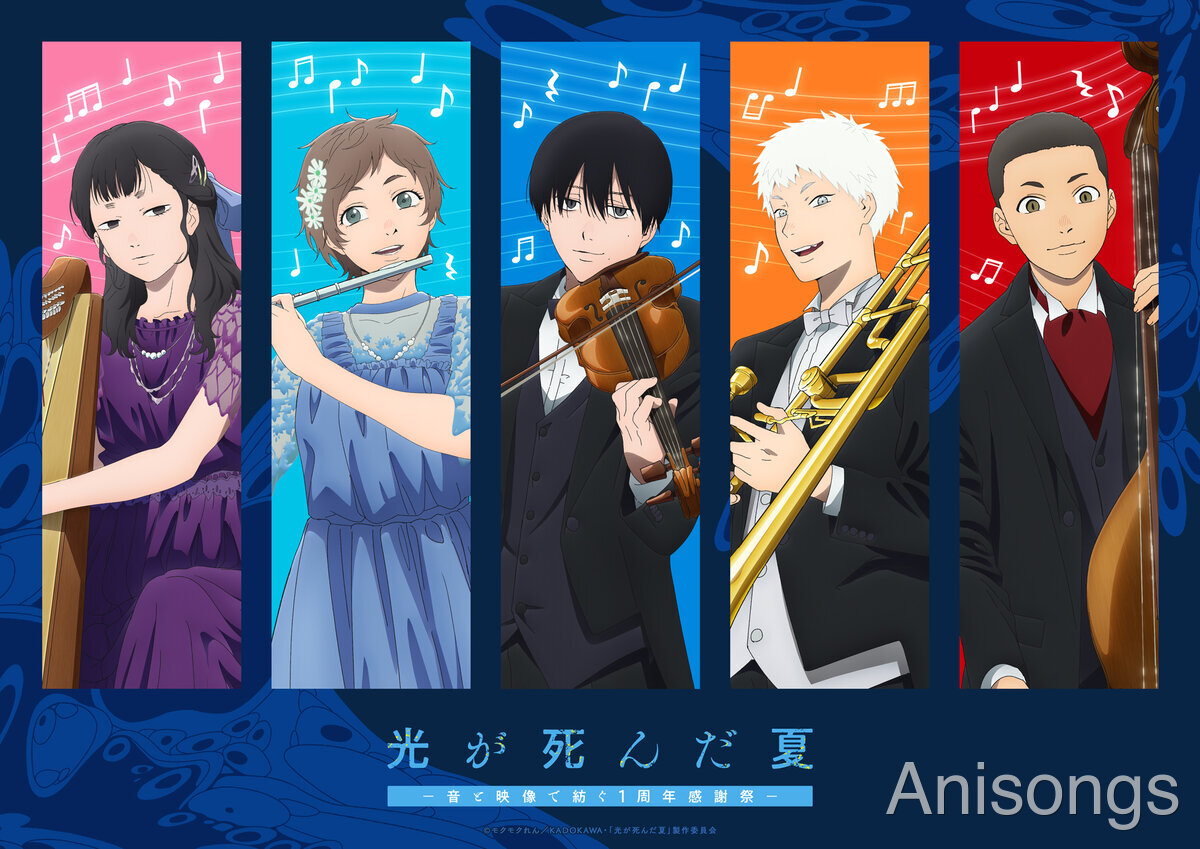
The ending of Chainsaw Man, "CHAINSAW BLOOD." The opening of Ranking of Kings' second cour, "Hadaka no Yuusha." The ending of SPY×FAMILY Season 2, "Todome no Ichigeki feat. Cory Wong." The theme of Doraemon the Movie: Nobita's Earth Symphony, "Time Paradox." The theme of My Hero Academia: You're Next, "Homunculus." The opening of SAKAMOTO DAYS, "Hashire SAKAMOTO." The opening of The Summer Hikaru Died, "Saikai." And the opening of Yomi no Tsugai, "Tobu Toki," together with its ending, "Tobou yo."
Look at this lineup. Shonen Jump, noitaminA, Doraemon, SPY×FAMILY — works that differ completely in genre and target age, and yet Vaundy's music blends naturally into all of them. At the same time, every song carries an individuality that can only be called a Vaundy song. Making this contradiction work — "fitting anything, yet belonging to no one else" — is Vaundy's greatest singular gift.
"I Want to Turn Anison into Pop"
About the production of "Hadaka no Yuusha," his first anime tie-in, Vaundy has said the following.
Anison is non-genre. There's rock, hip-hop, metal — music of all kinds of genres. And then, off to the side, there's the culture we call pop. Anison is packed with the appeal of Japan. So I'd long thought about whether I could make that more pop. (Natalie)
Through Vaundy, I wanted to turn anison into pop. To make songs that anyone would think are cool, but that are still properly anison — songs that grow richer whether you watch the anime first and then listen, or listen first and then watch.
Here is Vaundy's clear intent. To turn anison into pop. To make it mainstream. He goes so far as to say he wants to "become an artist who can make people feel that selling well is itself a cool thing." This stance is clearly different from the "running alongside" of King Gnu I wrote about last time. King Gnu keeps an appropriate distance from anime and trusts the moment when each side's fastball crosses the other's. Vaundy keeps no distance. He steps inside the work and reconstructs it as his own pop.
Even more striking is how Vaundy describes his relationship with anime production teams: "How much can I make the anime staff think, 'This song is cool! We'd better make cool visuals too.'" Music pulls the visuals, and the visuals pull the music. He consciously designs that synergy.
Yomi no Tsugai — Enveloping It as a "Pair"
And with Yomi no Tsugai, Vaundy stepped into new territory.
Yomi no Tsugai is the latest work by Hiromu Arakawa (Fullmetal Alchemist). Vaundy wrote, composed, and arranged both the opening, "Tobu Toki," and the ending, "Tobou yo." The opening is sung by Vaundy himself; the ending is sung by yama. The Vaundy–yama pairing is their first since yama's single "Kubittake" (a Vaundy-provided song).
Vaundy himself commented in an interview with Skream!:
I wrote two songs that form a "pair." Both depict the feelings of the two protagonists under the larger theme of "departure."
yama also said:
Maybe I'd always been searching for a reason not to fly. Thinking of someone precious, someone like blood kin, and calling out to each other, "Let's fly."
What's more, the single includes self-covers in which the two flip each other's songs: yama sings "Tobu Toki," and Vaundy sings "Tobou yo." The work's title — "Tsugai," a pair, two beings that form a set — is reflected in the very structure of the music.
At this point we realize that Vaundy's way of engaging with anime has reached a kind of summit. In the early "Hadaka no Yuusha," he sang it himself, made it himself, and drew close to the work. In Yomi no Tsugai, he writes an opening he sings himself while also writing a song for yama. He is at once the singer and the producer. He envelops a single work from both sides — his own voice and yama's.
"Stepping In" and "Running Alongside"
In the eleventh installment, I wrote that King Gnu's Daiki Tsuneta described the band's relationship with anime as "running alongside." King Gnu does not step into the work. They throw the band's fastball and trust the moment it crosses the work's fastball.
Vaundy's approach is the polar opposite. Vaundy steps inside the work. He reads the source material, writes songs to match the visuals, and writes music that fires up the production team. And with Yomi no Tsugai, he enveloped the work from both the OP and ED sides, with his own voice and yama's.
"Running alongside" and "enveloping." It is not a matter of which is correct. King Gnu's music has such a solid worldview that it shines precisely in crossing paths with an IP of equal power. Vaundy's music swims freely across non-genre, and so it can step into any work and convert that work into pop. The anison of the 2020s has gained both of these approaches at once.
In this series I have chased the moments when music and talent meet in the arena of anime and spark a chemical reaction. Vaundy is evolving the very way that reaction is set off. He draws close to the work, delivers the work to the masses, and finally envelops both sides of the work with his own hands. The declaration to "turn anison into pop" is surely still only halfway there. How far Vaundy goes from here — I can only look forward to it.
References
Vaundy first anime tie-in interview (Natalie): https://natalie.mu/music/pp/vaundy
Vaundy Yomi no Tsugai OP & ED theme comments (Skream!): https://skream.jp/news/2026/02/vaundy_tsugai.php
Vaundy & yama "Tobu Toki / Tobou yo" single info (TOWER RECORDS): https://tower.jp/article/feature_item/2026/04/04/0701
Vaundy Yomi no Tsugai OP & ED release info (rockinon.com): https://rockinon.com/news/detail/214771