Anisongs
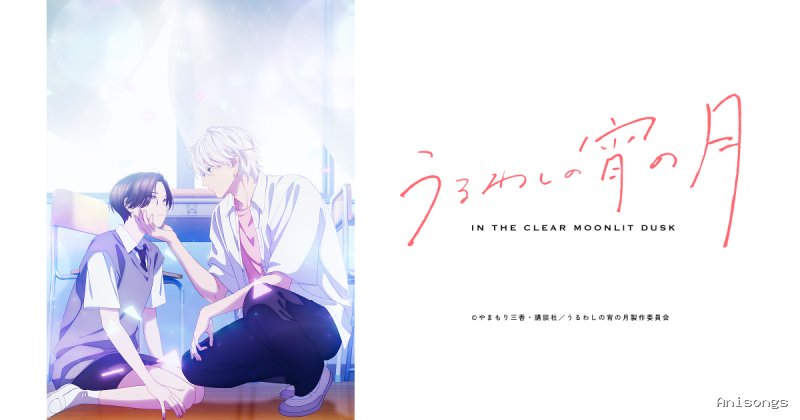
Uruwashi no Yoi no Tsuki is a love story adapted from Mika Yamamori's shoujo manga. It follows the awkward romance between Yoi Takiguchi, a high school girl dubbed "the Prince," and her senior Kohaku Ichimura, who bears the same nickname. UNISON SQUARE GARDEN wrote two original songs for this series: the opening theme "Uruwashi" and the ending theme "Azalea no Kaze." Having a single band handle both the OP and ED speaks to how deeply entwined the music is with the work itself.
What impressed me most, though, was discovering that an instrumental version of "Uruwashi" was used as background music during the protagonists' date scenes. The opening theme had slipped inside the story itself, quietly sustaining its atmosphere. A rock band's music had drawn perfectly close to the temperature of a shoujo manga's love.
From TIGER & BUNNY to Blood Blockade Battlefront — A History of Tie-Ups
UNISON SQUARE GARDEN's history with anime tie-ups runs deep.
The first major turning point came in 2011, when "Orion wo Nazoru" served as the opening theme for TIGER & BUNNY. The synergy between battle-anime visuals and the band's high-octane rock number catapulted their visibility overnight. Then in 2015, "Sugar Song to Bitter Step," the ending theme for Blood Blockade Battlefront, became a national hit. Selected for NHK's "Nippon Anime 100" best anisong list, it became the signature song that made the band a household name.
That said, the tie-up songs from this era were, to put it plainly, cases where "the Unison sound just happened to fit." Driving rock and battle anime have always been a natural match. The songs were genuine, but it was less a matter of the band "attuning" to the work and more a fortunate coincidence between the band's strengths and the show's direction.
The wind shifted, I believe, somewhere between Yozakura Quartet and Blood Blockade Battlefront. For Yozakura Quartet, they contributed multiple songs spanning the OVA (2011) and TV series (2013), and their technique of weaving the show's worldview into lyrics became explicit. In the Blood Blockade Battlefront ending sequence, a delicate distance emerged — receiving the main story's serious mood while depicting "the everyday within the extraordinary" with pop exuberance.
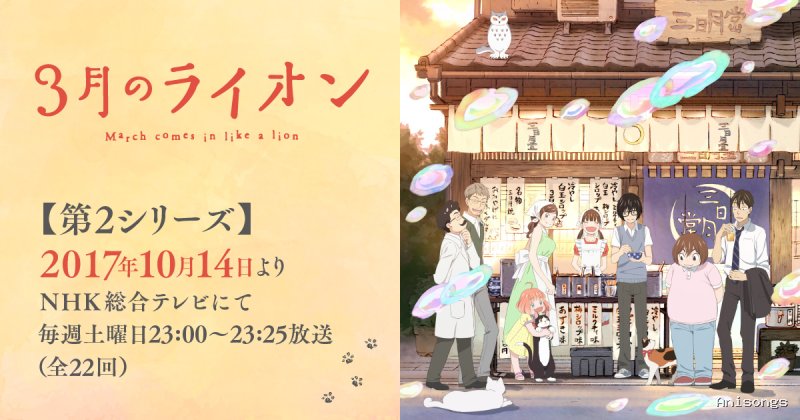
From there, the breadth of their tie-ups is staggering. For Welcome to the Ballroom (2017), they handled the opening theme for both the first and second cours. For March Comes in Like a Lion Season 2 (2018), they wrote the gentle "Haru ga Kite Bokura" for the world of competitive shogi. Run with the Wind (2018) was an ekiden running anime; Fate/Grand Order -Absolute Demonic Front: Babylonia- (2019) was epic fantasy; and for Blue Lock (2022 onward), they've written three different opening themes alone. They even returned for the TIGER & BUNNY sequel (2022). Cross-referencing with Anisongs.jp data, they've contributed over 20 songs across more than 10 anime series.
What's remarkable is how the genres of these works expand with each collaboration. Battle, sports, slice-of-life, fantasy, mystery. Every time, UNISON SQUARE GARDEN manages to locate the sound the work needs.
Why "Uruwashi" Is Special
Why is "Uruwashi" special? Because it's the song where UNISON SQUARE GARDEN reached the farthest point from their own musical identity.
Tomoya Tabuchi, the band's bassist and songwriter behind virtually all their songs, spoke about this tie-up on the anime's official website (https://uruwashi-anime.com/): "A friend named Maisa Tsuno introduced me to Yamamori-sensei's works, and I was so moved by every single one that I'd been secretly writing songs for them on my own." Maisa Tsuno was the guitarist of Akai Koen and an important musical companion for Tabuchi. Through that friend, he encountered Mika Yamamori's manga and had been composing songs even before receiving an offer. Tabuchi also had a published dialogue with Yamamori when volume 1 was released (Dessert magazine, February 2021 issue), and this longstanding relationship forms the foundation of this tie-up.
On top of that, Tabuchi also said: "Would the voice and sound of a rock band really suit Yamamori-sensei's world, which is almost too beautiful?" After serious deliberation, what emerged was "the raw edge that a rock band inherently possesses" and "the sensuality that vocalist Kousuke Saito makes possible — an affinity with this work."
Tabuchi described it as "sensuality," but what I heard in "Uruwashi" was something slightly different. Kousuke Saito's vocals certainly possess a distinctive timbre. But the heart of this song lies in the rhythm section's development leading into the chorus. The groove created by Takao Suzuki's drums and Tabuchi's bass brilliantly captures the elation of love — the sparkle of that moment when your chest tightens. Scat vocals appear; jazz vocabulary peeks through. An ordinary rock band could not have written this song. The breadth of musical vocabulary that UNISON SQUARE GARDEN accumulated over fifteen-plus years bloomed all at once in the uncharted territory of a love story.
Evolution Through "Adaptation"
In vol.11, I wrote about King Gnu's approach of "running parallel" — maintaining distance from the work because their own worldview is so strong. In vol.12, Vaundy's approach was "enveloping" — entering the work's interior and draping it in music.
UNISON SQUARE GARDEN differs from both. They consistently write "UNISON SQUARE GARDEN songs." They neither maintain the distance of running parallel, nor dissolve themselves into the work as enveloping does. While preserving their identity as a rock band, they open different drawers of their repertoire for each work. For battle anime: velocity. For sports anime: propulsion. For a shogi anime: the texture of spring. And for a love story: the sparkle of romance.
"Adaptation" may be the closest word for it. The self doesn't change even when the environment does, yet the output can shift to match the surroundings. In biology, adaptation is the change a species undergoes to survive selection. UNISON SQUARE GARDEN's anisong catalog has survived and evolved in precisely that way.
Listening to "Uruwashi," these were the thoughts that came to me. It took fifteen years for a rock band to learn how to play the sound of a shoujo manga's love. That time itself, I believe, is this band's greatest weapon in the world of anisong.
References
- TV Anime Uruwashi no Yoi no Tsuki Official Website, Tomoya Tabuchi Comment: https://uruwashi-anime.com/
- UNISON SQUARE GARDEN OP/ED Theme Song Announcement (Sony Music Artists): https://www.sma.co.jp/s/sma/news/detail/112101
- "Uruwashi" Pre-release News (Billboard JAPAN): https://www.billboard-japan.com/d_news/detail/157344
- Mika Yamamori x Tomoya Tabuchi Dialogue (Dessert magazine, February 2021 issue, Kodansha)
- UNISON SQUARE GARDEN 20th Anniversary Interview (Natalie): https://natalie.mu/music/pp/unisonsquaregarden19
- UNISON SQUARE GARDEN Tie-Up List (Anisongs.jp)